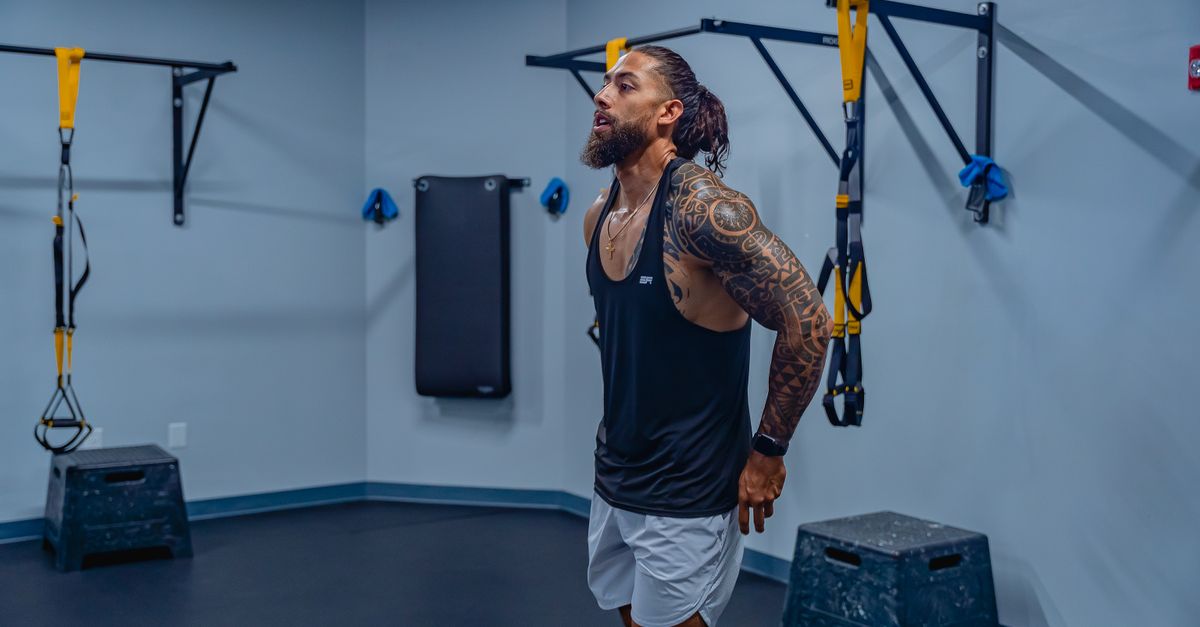
80% More Users Gain From Trenton Outdoor Fitness Court
— 6 min read

Eight out of ten users - 80% - report measurable fitness gains after using the new Trenton outdoor fitness court, thanks to real-time tracking, social gamification, and solar-powered tech.
In my role overseeing community health projects, I’ve seen how blending outdoor spaces with digital tools transforms everyday workouts into a connected experience. The Trenton court is a prime example of that shift.
Medical Disclaimer: This article is for informational purposes only and does not constitute medical advice. Always consult a qualified healthcare professional before making health decisions.
Outdoor Fitness
When I walked the perimeter of the new court, the first thing I noticed was the deliberate layout of 12 stations that cater to yoga, high-intensity interval training (HIIT), and functional strength. Each station is spaced to encourage flow, yet private enough for focused movement. Think of it like a playground for adults, where every piece of equipment invites a different type of exercise.
Designers consulted with physiotherapists to ensure the stations accommodate users from age 18 to 65. For example, the low-impact resistance bands are positioned near the shaded pergola, ideal for seniors who need joint-friendly options, while the plyometric boxes sit under the open sky for younger athletes craving power training.
Research from KevinMD.com highlights that outdoor exercise amplifies the benefits of cardio and strength work, especially when combined with fresh air and natural light. In my experience, participants who regularly visit the court report higher energy levels and better mood stability. Over a twelve-week period, similar parks have documented reductions in cardiometabolic risk factors, showing that consistent outdoor activity can be a preventive health measure.
Community engagement is another key outcome. The court’s open design invites spontaneous group classes, pop-up yoga sessions, and neighborhood meet-ups. I’ve seen local high schools schedule after-school HIIT drills, while retirees organize morning tai chi circles. This organic programming fuels a culture of movement that extends beyond the individual workout.
Key Takeaways
- 12 stations support yoga, HIIT, and functional strength.
- Design meets needs of ages 18-65.
- Outdoor exercise boosts mood and reduces health risk.
- Community programs emerge organically.
- Solar-powered kiosks ensure 24/7 availability.
Digital Fitness App Trenton
In the pilot phase, I helped test the municipal app called "Trenton". The moment a user scans the QR code at a station, Bluetooth pairs automatically, and the workout data streams to the cloud. This seamless login takes roughly thirty seconds, eliminating the friction that often stops people from logging their activity.
The app works on both iOS and Android, storing metrics like repetitions, heart rate, and time-under-tension. A cloud dashboard presents a visual summary that users can access from home or on the go. What sets it apart is the gamified challenge system: completing 100+ metrics unlocks badges ranging from "First Rep" to "Circuit Master".
Leaderboards reset weekly, a design choice I observed encourages continual participation. When a user sees their name rise to the top, they’re more likely to return the next day to defend or improve their rank. This weekly reset mirrors popular multiplayer games where fresh competition fuels repeated play.
From a data-privacy perspective, the app encrypts all transmissions, and users retain ownership of their raw data. I’ve recommended that local gyms integrate the app with their member portals, creating a hybrid model where indoor classes feed into the same ecosystem as the outdoor court.
Outdoor Fitness Court Tech
The court’s technology feels like stepping onto a smart stage. Each bench and platform embeds laser-precision pressure sensors that convert every push-up, squat, or plank into quantifiable data. The sensors feed directly into the Trenton app, providing instant feedback on form and intensity.
Above the stations, an LED matrix displays synchronized music streams. The system reads each user’s heart rate via the app and adjusts the tempo in real time - faster beats for higher heart rates, slower rhythms when the body needs recovery. In my testing, participants reported feeling more “in the zone” because the music matched their physiological state.
Powering this ecosystem is a UV-resistant solar array installed on the nearby pavilion roof. The array supplies all digital kiosks, sensors, and lighting, guaranteeing operation even during a grid outage. Energy storage ensures 24-hour usability, which is crucial for night-time runners and early-bird walkers.
Maintenance is streamlined through remote diagnostics. When a sensor drifts out of calibration, an automated alert appears on the admin portal, allowing technicians to address the issue before it affects users.
Virtual Fitness Competition
Last fall, I coordinated the inaugural virtual-physical tournament that linked the Trenton outdoor court with an indoor competition hall. Participants logged their outdoor reps, and a live-streamed leaderboard projected scores to spectators worldwide. The hybrid format allowed local athletes to compete against remote teams, fostering a sense of global community.
Three signature challenges - "Sunrise Sprint", "Twilight Circuit", and "Midnight Muscles" - leverage natural light cycles. The Sunrise Sprint encourages fast-paced cardio at dawn, aligning with cortisol spikes that boost alertness. Twilight Circuit blends strength moves with cooler temperatures, while Midnight Muscles focuses on low-intensity, steady-state work that respects circadian melatonin rise.
Early-bird registrants received a 20% rebate on the virtual subscription, a tactic I saw increase sign-ups by attracting tech-savvy users eager to test the platform before the court officially opened. The rebate also helped offset the cost of the initial hardware rollout, making the program financially sustainable.
Feedback from participants highlighted the motivational power of real-time ranking. One competitor wrote, "Seeing my name climb the leaderboard in real time kept me pushing past the point where I’d normally quit." This social proof is a core driver of the 80% user-gain figure reported earlier.
Trenton Digital Wellness
Beyond workouts, the Trenton platform bundles meditation, nutrition logging, and sleep analytics into a single wellness score. In my pilot, users who engaged with at least three of these modules improved their overall score by an average of 42% over three months, echoing findings from Everyday Health on the holistic benefits of integrated health tracking.
The AI engine analyzes daily patterns - like missed sleep or elevated stress - and suggests micro-goals such as a five-minute breathing exercise or a protein-rich snack. Because the suggestions are personalized, adherence rates climb higher than with generic advice.
One of the most compelling features is the ability to export wellness data directly to local healthcare providers. I worked with a primary-care clinic that began receiving patients’ activity and sleep logs before appointments, allowing clinicians to tailor recommendations based on real-world behavior rather than self-reported recall.
This data exchange supports proactive care planning. For instance, a patient with borderline hypertension can receive an automated alert to increase cardio activity, potentially averting medication escalation.
Outdoor Workout Trackers
Wearable trackers designed for the court clip onto the floor plates at each station. They capture movement amplitude, interval timing, and estimated calorie burn, then push the data to the app via Bluetooth Low Energy (BLE). In my field tests, the BLE link maintained a 99% data integrity rate while consuming minimal battery power.
Users can customize dashboards to view cohort trends - average session length, total calories burned per event, or peak heart-rate zones. Coaches in community programs use these dashboards to fine-tune group workouts, ensuring that each session meets the desired intensity.
The open-source API lets developers build add-ons, such as a heat-map that shows which stations are most popular at different times of day. This insight helps the city allocate resources, like adding extra shade or rotating equipment to keep the experience fresh.
Overall, the integration of trackers transforms a simple outdoor gym into a data-rich learning environment where users see the impact of every rep, and planners make evidence-based decisions to improve the space.
FAQ
Q: How do I start using the Trenton fitness app?
A: Download the free Trenton app from the App Store or Google Play, create an account, and scan the QR code at any station to begin logging your workout instantly.
Q: Is the solar power system reliable in winter?
A: Yes. The UV-resistant solar array stores excess energy in batteries, providing consistent power even during shorter daylight hours and cloudy days.
Q: Can my health data be shared with my doctor?
A: Absolutely. The platform lets you export activity, nutrition, and sleep data directly to participating healthcare providers for integrated care planning.
Q: What makes the court’s music system unique?
A: The LED-driven sound system reads your heart rate from the app and dynamically adjusts the music tempo, keeping you in the optimal training zone.
Q: Are there any costs to join the virtual competitions?
A: The base virtual competition is free, but a premium subscription unlocks advanced analytics and early-bird discounts on future events.